History of Bucks Airport
Over eight decades of aviation in the heart of South Jersey
Buck's Flying Field
Long before it appeared on any navigation chart, this quiet stretch of South Jersey farmland was known simply as Buck's Flying Field — a grass strip carved out of the Cumberland County countryside by Norman "Buck" Daughady and his wife Alice. The Daughadys, residents of nearby Woodruff, New Jersey, had a passion for aviation and the vision to build a local hub for it.
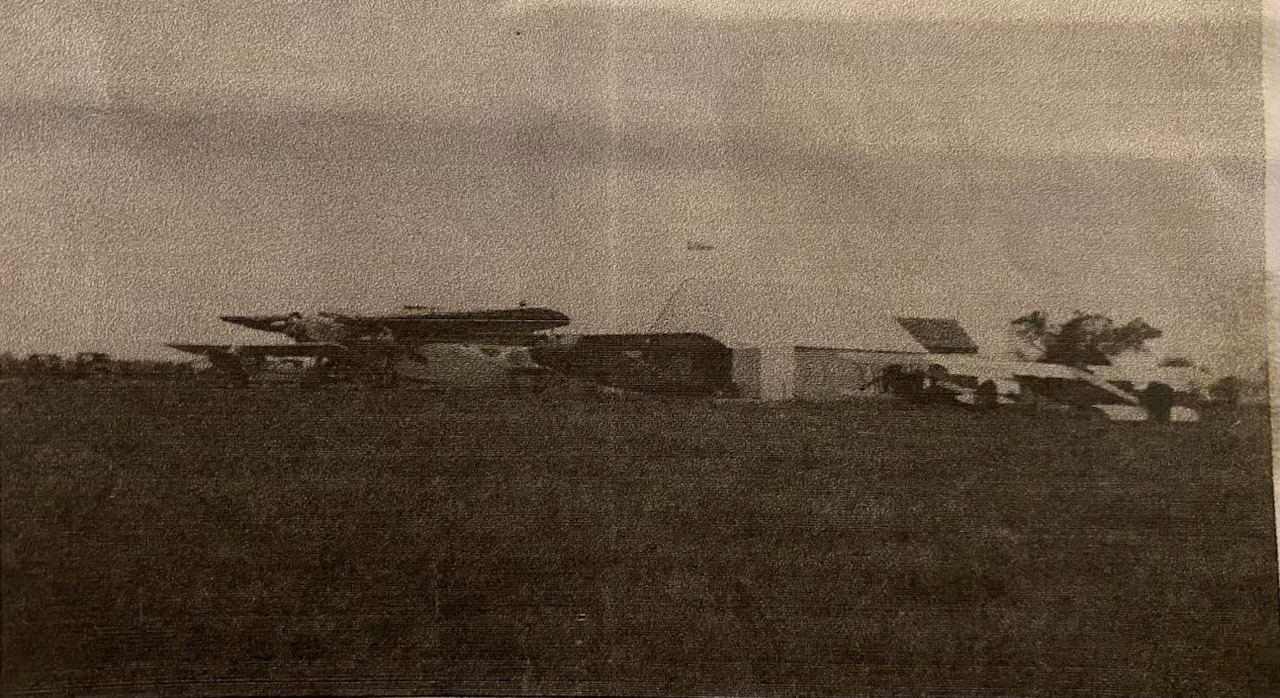
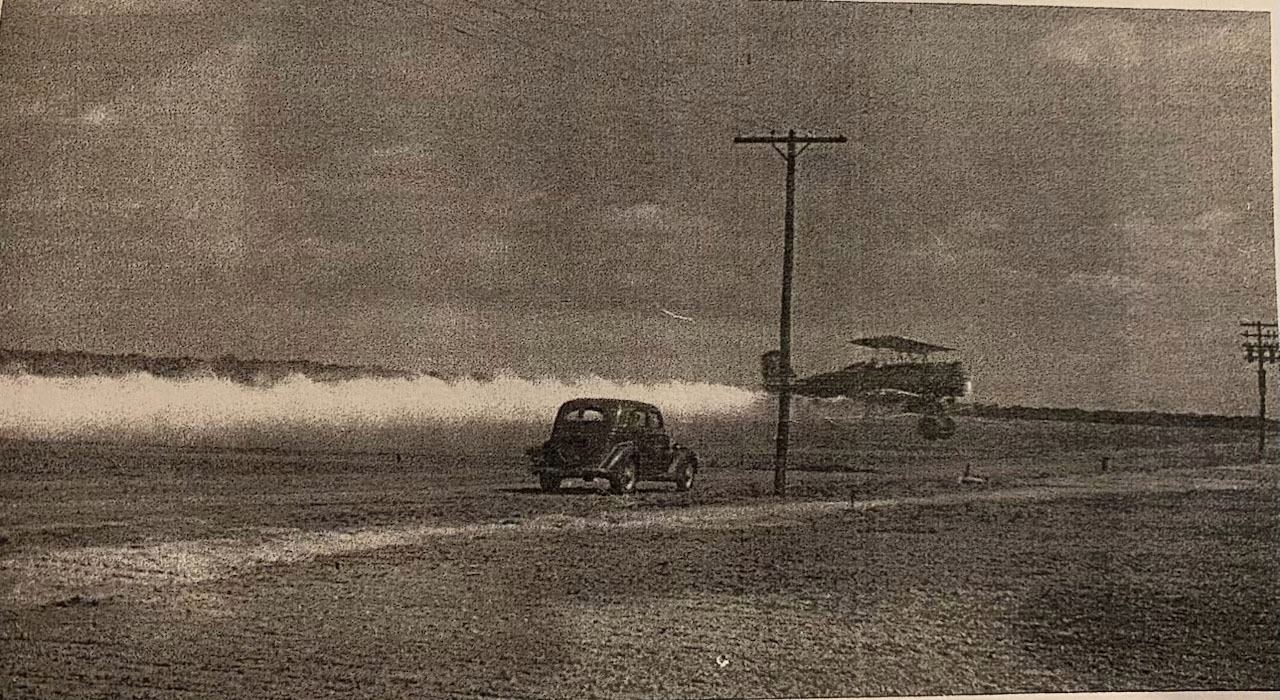
In the early days, aviation was still a novelty in rural New Jersey. The field drew pilots from across the region, and a large hangar became the social and mechanical center of the operation. Crop dusting was among the earliest commercial uses of the field, serving the vast agricultural flatlands of Cumberland County. Watching a biplane sweep low over the fields with a trail of spray behind it was a common sight here for decades.
A Notable Visitor
Local historical accounts suggest that Buck's Flying Field may have played host to one of aviation's most celebrated names. According to a 2012 column published on NJ.com by Bridgeton chronicler Jack Hummel, drawing on research from local historian Jim Bergmann, Amelia Earhart made several visits to South Jersey during the 1930s to see her friend, author George Agnew Chamberlain, who lived in nearby Quinton, New Jersey.
"Amelia would either drive or fly down to South Jersey to visit Chamberlain in Bridgeton or Quinton. Amelia would land her plane at either Buck Airport, the old fairgrounds or in the field near Chamberlain's home in Quinton. They would play golf at Cohanzick where Chamberlain was a member. In 1931, Amelia signed Chamberlain's guest book."— Jim Bergmann, as published in Jack Hummel's local history column, NJ.com, March 2012
No official flight records from the era survive to confirm the specific landing sites, but if the account is accurate, it places one of history's most celebrated aviators on this same grass strip in the earliest days of Buck's Flying Field.
Licensed for Commerce
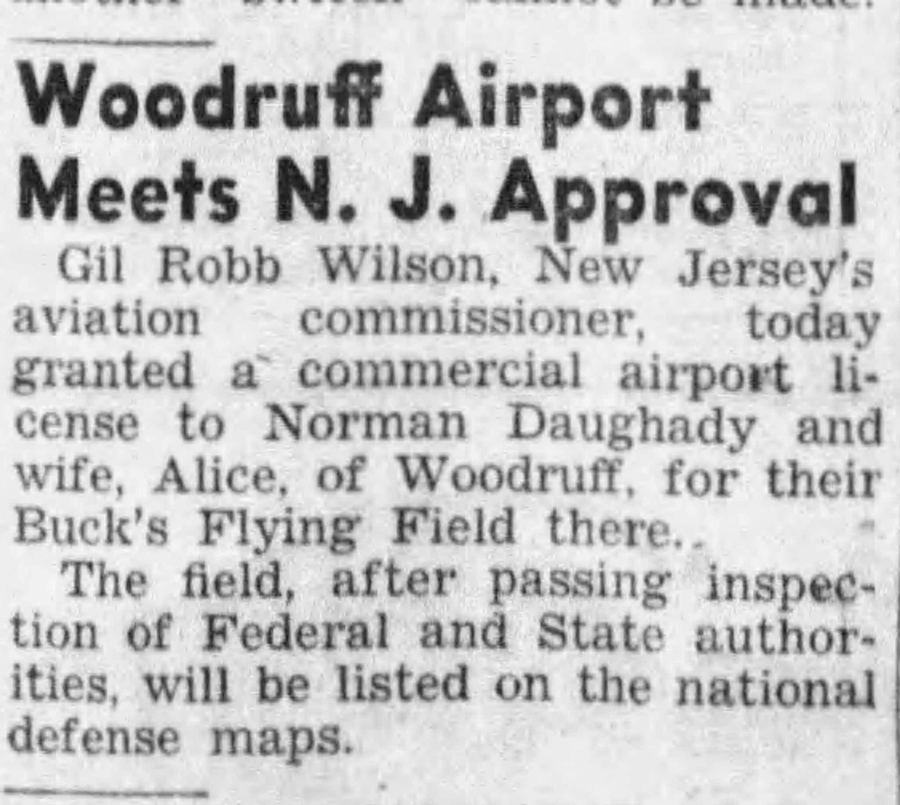
By 1940, Buck's Flying Field had grown into a serious operation. New Jersey's aviation commissioner, Gil Robb Wilson, granted Norman and Alice Daughady a commercial airport license — official recognition that the field met federal and state standards. Following the inspection, the airport was listed on national defense maps, a significant designation in the years leading up to World War II.
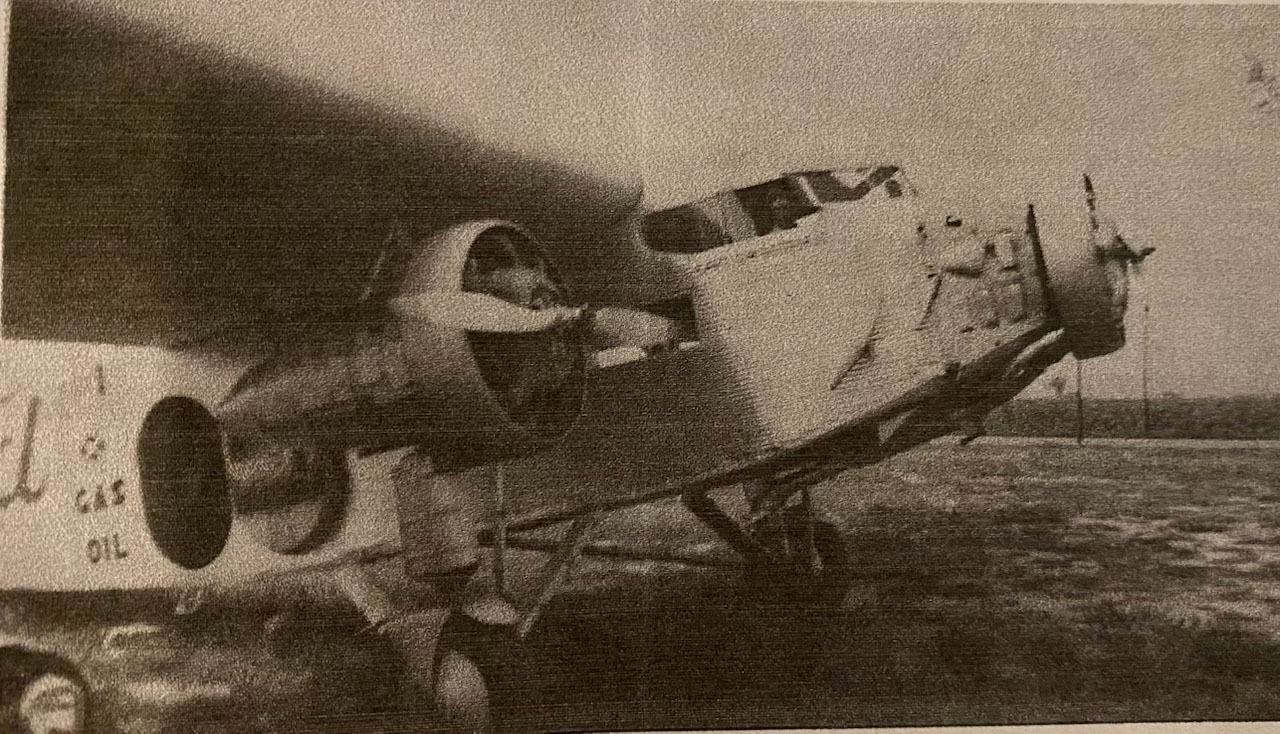
It was around this era that the Ford Tri-Motor — nicknamed the "Tin Goose" — made an appearance at the field. One of the most celebrated aircraft of the early commercial aviation age, the corrugated aluminum trimotor had helped pioneer American air travel in the late 1920s and 1930s. Its visit to Buck's Flying Field was a testament to the airport's growing reputation in the region.
"Gil Robb Wilson, New Jersey's aviation commissioner, today granted a commercial airport license to Norman Daughady and wife, Alice, of Woodruff, for their Buck's Flying Field there. The field, after passing inspection of Federal and State authorities, will be listed on the national defense maps."— Local newspaper, circa 1940
The Man Behind the Name
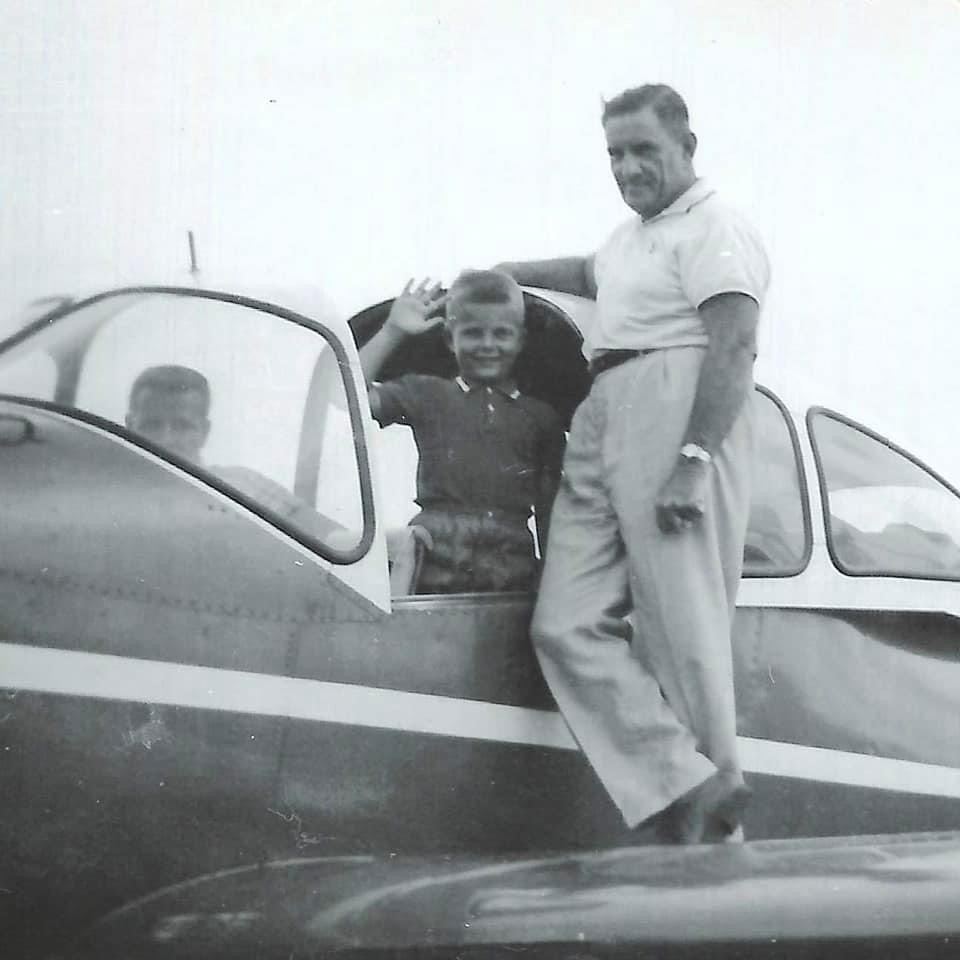
This photograph, taken in July 1959, captures Norman "Buck" Daughady with a young boy named Bruce, a local kid from town whose birthday present that year was an airplane ride at the airport. By this point, Buck had spent decades building and nurturing the field — watching it grow from a rough grass strip into an established part of South Jersey's aviation community.
The image speaks to something essential about Bucks Airport: it was never just a business. It was a community gathering place and a labor of love, open to anyone with a curiosity for flight — whether a seasoned pilot or a boy celebrating his birthday. Buck's legacy wasn't just the airport itself — it was the culture he created around it. That culture endures today.
DiOrio Aero Service
Following the Daughady years, Buck's Airport entered a long chapter under the ownership of Joseph J. DiOrio of Upper Deerfield Township. Known throughout South Jersey as "Airplane Joe," DiOrio had begun flying as a teenager and built a career that wove together aviation, agriculture, and aircraft maintenance into something inseparable from the identity of the field itself.
For more than three decades, DiOrio operated DiOrio Aero Service from Buck's Airport, providing aerial application work for farms across the region. He became a familiar figure to local farmers and pilots alike, flying a fleet that included J-3 Cubs, Stearmans, and purpose-built agricultural aircraft. Federal accident records from 1992 list him as the owner and operator of a Grumman Ag-Cat agricultural aircraft based at Buck's, with approximately 10,000 hours of flight time — a figure that speaks to a life spent in the cockpit.
DiOrio was a licensed commercial pilot and flight instructor. Under his stewardship, the airport remained what it had always been: a working grass airfield, deeply tied to the agricultural character of Cumberland County. Joe DiOrio passed away in 2013, but his decades of aerial work and dedication to the field remain an important part of its history.
The Pearl Era
From the Navy to the Cockpit
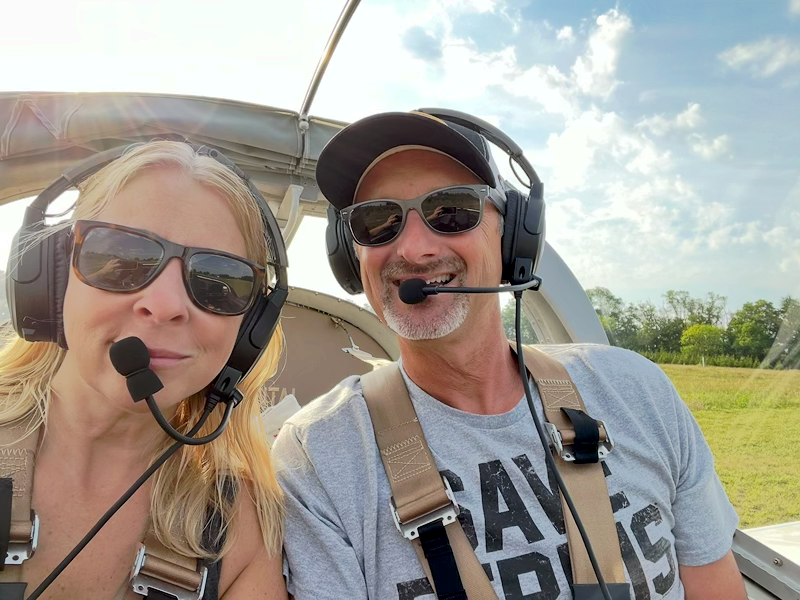
Bucks Airport is currently owned by Aaron and Jennifer Pearl. The Pearls purchased the airport in August of 2021, but Aaron's passion for aviation dates well before then. At a young age, Aaron loved planes and aviation, but just like most people, he thought it was an unattainable goal to get his pilot's license. Aaron enlisted in the Navy after high school and was stationed on two aircraft carriers: the USS America CV 66 and the John F Kennedy CV 67. Working and serving on the ships made him love aviation even more. He worked on the main engines of the aircraft carriers, and although Aaron did not work directly with the planes on the ship, he took every opportunity he had to go up to Vulture's Row and watch the flight operations.
Twenty years later, Aaron had raised a family, was running a successful HVAC business, and managing real estate. He felt it was finally time to pursue his pilot's license. At the age of forty-two, Aaron first received his Sport Pilot License for powered parachute. He later obtained both his Private Pilot's License and title for Certified Flight Instructor for powered parachute. Aaron continued on to obtain his Sport License in Airplane Single Engine Land as well as his Light Sport Repairman Maintenance (LSRM) certificate for both airplane and powered parachute.
A Field with Potential
During this time, Aaron had his powered parachute and plane based at Bucks Airport. The airport was in disarray; most buildings were falling down, filled with trash, or the hangar doors wouldn't even open. The fuel system and electric were in complete disorder as well. Only eight registered planes were based at Bucks. The little income that the airport got in from the hangar rentals was barely enough to pay the taxes. Aaron knew that it would take a significant amount of time and money to get the airport to where it had the potential to grow. Aaron could see the potential that the airport had. In his short time in aviation, he knew that smaller airports were slowly going away, and once they went away, they would not come back. With his background in construction and in property management, Aaron felt confident that he could bring this airport back to life. After some convincing to his wife, Jennifer, Bucks Airport was purchased in August of 2021.
Restoring the Grounds
Things moved quite quickly after purchasing; numerous dumpsters were brought in to remove all of the trash and tires that were collected around the airport. Proper equipment was brought in to maintain the grass, runway, and grounds. After the initial trash and debris was removed, the first major thing that had to be done was to run better and more efficient electricity to all the buildings. Aaron also had a transformer installed to the back of the property for future hangars. Hundreds and hundreds of feet of pipe were laid and new wiring was installed by Krise Services. Along with new electric, more pipe was laid for security cameras and internet access points, which were installed around the airport by Interactive Security Systems.
The next area that had to be tackled was the fuel system. Not only was the fuel system in disarray, but past fees from eight years prior had not been paid and had to get settled with the state to keep the permit licensing for the fuel tank. With the help of Lee Transport Systems, Aaron was connected with Spark Contractors, who went above and beyond installing the fuel tank at Bucks. Getting the fuel system up and running properly with a credit card machine was no easy task, but thanks to the Ruga Family, Bucks now has a safe and effective system in place. Aaron later met with the zoning officer to discuss the potential construction of new hangars. The original plan was to add four rows of hangars for future storage; in 2022, the first row was built, which was a 6,000 square-foot building that added six more storage T-hangars for planes. Simultaneously, an old row of hangars that held six planes was getting refurbished by replacing the old, rotten wood and installing new metal.
Extending the Runway
Extending the runway was Aaron's next task. Bucks' runway was 1,900 feet long, and although this is safe for most small General Aviation planes, many pilots were uneasy about the short runway. Bucks Airport was able to work out a deal with Lupton Tree Farm, who owns the land just north of the runway, by doing a land lease exchange. This allowed for Bucks' runway to be extended an additional 500 feet, giving pilots more time and more area to safely take off and land. After two and a half years of lots of paperwork and surveys, in January of 2024, the runway was officially extended to 2,420 feet. Also in 2024, two more rows of hangars, each 6,000 square feet, were constructed. Each building holds six planes, bringing the total of airplanes based at Bucks to thirty-eight.
A Restored Pilot's Lounge
Bucks Airport had a small pilot's lounge that had not been updated since the mid-1970s. Aaron wanted to update the lounge as a multipurpose space, but it was important for him to preserve the history of the building as this building was a World War II surplus hangar. In the hangar where the pilot's lounge was located, two planes were moved out and the hangar was opened up. Aaron kept the original structure and roof, but installed garage doors instead of hangar doors and poured a beautiful concrete floor, which was then stamped and stained to look like original barnwood. Old hangar doors were taken apart and re-purposed in the room as two accent walls, keeping much of this building as original as possible. With its historic beauty, Bucks' new and improved pilot's lounge was completed in 2025.
Looking Ahead
In 2026, a new row of hangers is expected to be built, with construction beginning in August. This row of hangers will hold ten planes and be almost 10,000 square feet. The future plans involve remodeling some more of the existing buildings, adding more restrooms, updating the runway lighting, and getting the power lines on Landis Avenue buried. Bucks Airport is also preparing to redo an outdoor area for pilots to relax, have a campfire, and discuss aviation. This area would have a nice view of the runway, with shady trees and decorative lighting. Aaron, as well as the pilots based at Bucks, are excited for what is to come.
Still Flying, Still Community
Bucks Airport continues to welcome pilots and aviation enthusiasts from across the region — just as Buck intended.